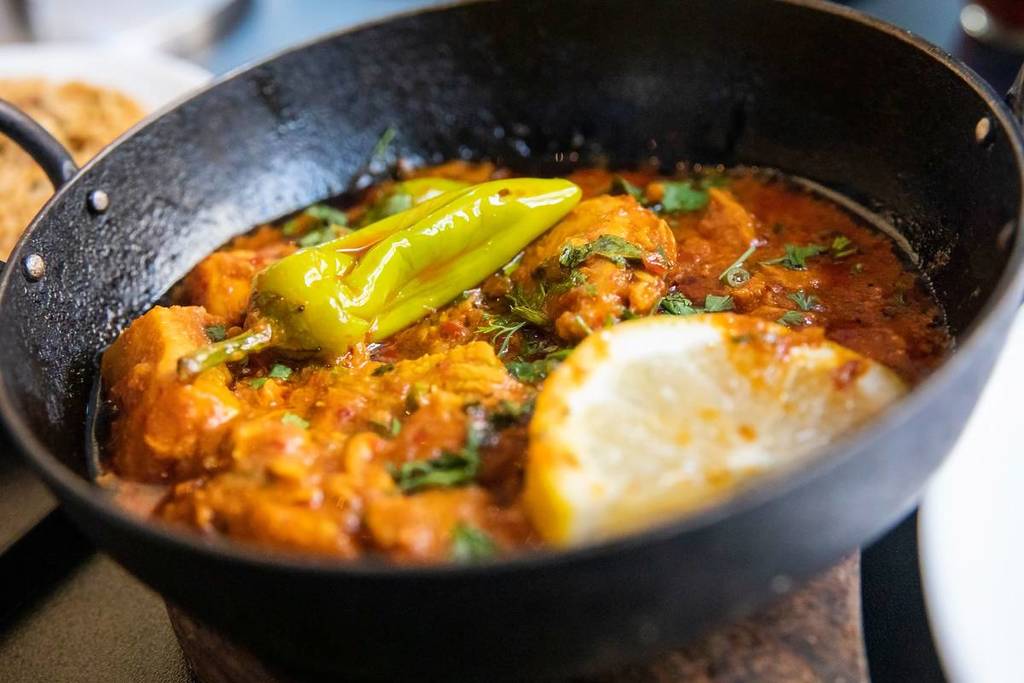

Walk into the majority of Indian restaurants in the UK, and you will likely find a balti or two on the menu. Whether it is an authentic balti is another matter altogether that’s probably best left unquestioned. Because far too often, the history and tradition of this iconic Birmingham dish are forgotten.
Traditionally, these Pakistani-style curries are made using the balti technique, cooked quickly over high heat, almost like a stir-fry. Invented in Birmingham back in the mid-70s, the name comes from the balti bowl in which it was first cooked, later lending its name to the triangle around Ladypool Road, Stratford Road, and Stoney Lane.
At its height, the Balti Triangle boasted over 40 Balti houses, including the dish’s supposed originator, Adil’s, although only a few remain, including the now-longest-running Shabab’s, alongside Shahi Nan. In the meantime, the dish itself has been corrupted, watered down, and served in name only all over the UK.

“The balti’s roots are in Birmingham and in the early 90s, restaurants around the country wanted to jump on to the balti bandwagon and started introducing it on their menus, which is fine if it’s done properly, but it wasn’t,” said Zaf Hussain, Shabab’s owner, who bemoaned the “balti fraud” to the BBC.
That’s why a bid, backed by the eight authentic restaurants from the Association for the Protection of the Authentic Balti (APAB), has now been submitted to safeguard the original and authentic Birmingham balti—protecting it under the Department for Culture, Media and Sport’s Trail of Cultural Heritage scheme.
The UNESCO-backed scheme will hopefully work much like the protections for other UK foods, such as the Melton Mowbray pie, Stilton cheese, or Cornish pasties—where they must follow specific recipe instructions and/or be produced within a specific region. A decision on the balti’s status will take around six months to make.