


Skyscrapers, canals, and old industrial buildings. Birmingham certainly has a ‘look’, but when you start to wander around, you may have your expectations shattered. Because there are some truly extraordinary places in the Second City and the wider West Midlands region that feel they shouldn’t belong here—but believe me, they do!
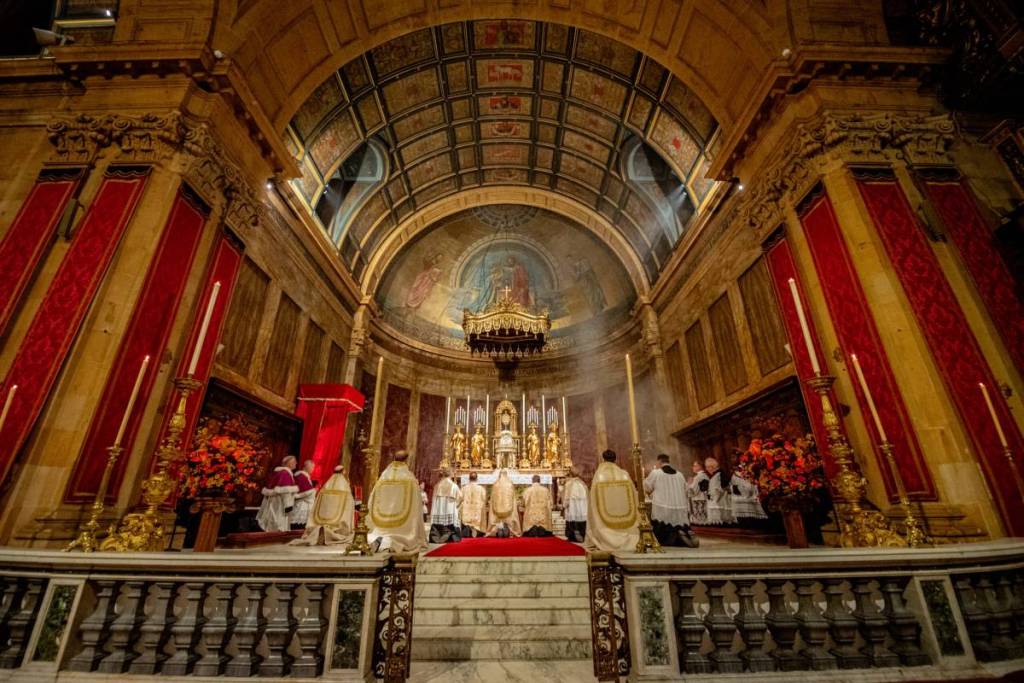
Birmingham’s ‘Little Rome’ was constructed between 1907 and 1910 as a memorial to the community’s founder, Cardinal John Henry Newman. In the Baroque style, the Parish Church of the Immaculate Conception often echoes Vatican City’s St. Peter’s Basilica with its breathtaking architecture and ornate details. Fun fact: J. R. R. Tolkien was a parishioner here for nine years during his childhood.

Just west of Birmingham in Tividale is one of the largest Hindu temples of its kind in the UK and Europe. The Shri Venkateswara Balaji Temple is dedicated to Venkateswara, aka Balaji, who is an avatar of the god Vishnu. Inspired by the Tirupati Venkateswara Temple in India, it’s been open to the public since 2006 and also houses shrines for many major Hindu deities like Shiva, Ganesh, and the Navagrahas.

Named after the Roman god of wine, situated under the Burlington Hotel on New Street, Bacchus Bar dates back to 1398. But being one of the oldest pubs in Birmingham is probably the least interesting thing about it. Probably the most bizarre bar in the Second City, it’s like a location out of ‘Harry Potter’. Inside, choose between uniquely themed rooms, filled with everything from Roman mosaics and Egyptian hieroglyphics to Gothic archways and Medieval armour.
Recommended Articles
 Brum, the Second City, Workshop of the World: where Birmingham’s nicknames come from – from the Brummagem coin insult to a pub called 1000 Trades
 Just on the outskirts of Birmingham lies an intact 14th-century castle that only opens to the public one day a year

In many ways, Winterbourne House and Garden is very Birmingham. Tucked away in leafy Edgbaston, the Edwardian home employs the Arts and Crafts style that this city played a significant role in creating (made famous by the Birmingham Set’s William Morris and Edward Burne-Jones).
The botanical gardens tell a different story, however, as you stroll around their magnificent seven acres. Home to over 6,000 different rare and exotic plant species, it was designed by Margaret Nettlefold in the early 20th century and is full of surprises. Within the grounds, you’ll find an Italian-style garden, while elsewhere there’s a Japanese bridge.

The first purpose-built Serbian Orthodox church in the UK is located in the one-of-a-kind model village of Bournville. If that doesn’t boggle the mind, nothing will. Built by exiled Serbs post-WW2, the church is a rare example of 14th–century Byzantine–Moravian style—adorned with medieval frescoes copied from the oldest Serbian monasteries in Kosovo.
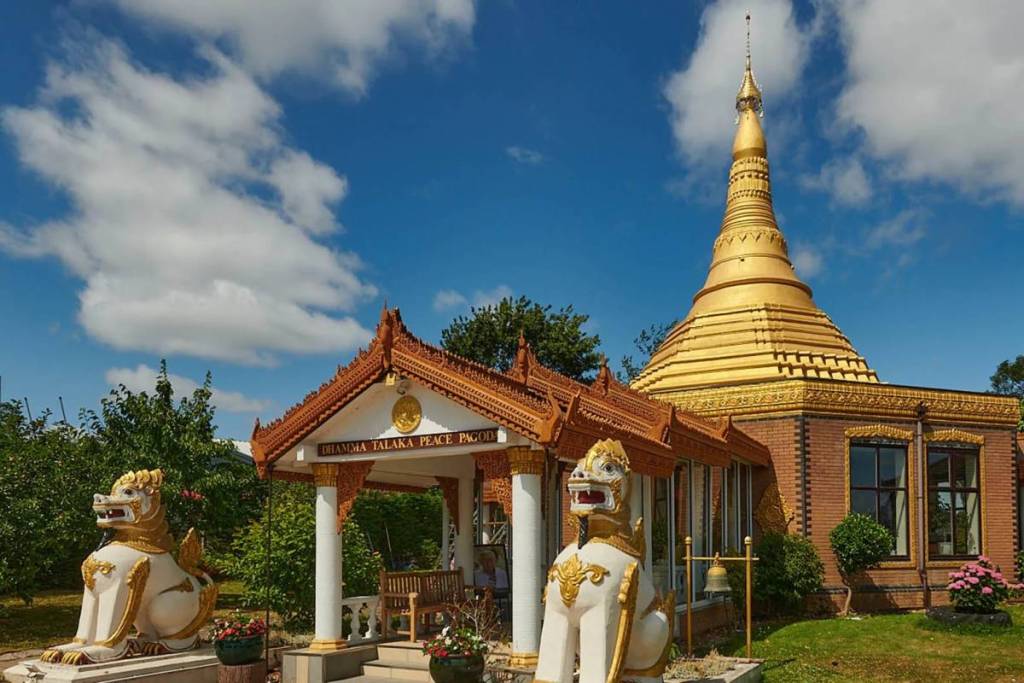
With a name meaning ‘Reservoir of the Teaching’, referring to the nearby Edgbaston Reservoir, this is the only traditional Burmese-style peace pagoda in the Western hemisphere. Also on its grounds are a Buddhist monastery and teaching hall, as well as a meditation garden to the side overlooking the reservoir’s dam.

The whole of Birmingham’s Chinatown will have you thinking you’re 5,000 miles away—from endless rows of red lanterns and pagoda-shaped archways to the oldest Cantonese restaurants in Birmingham, Chung Ying. But the Chinese Quarter is only growing bigger and better every year. Most recently, Lucky Claw became the first East Asian-style arcade in the city—a hub of youthful activity in the Far East.

There’s no arguing that Moseley Bog feels ‘otherworldly’—and it even inspired the world of JRR Tolkien’s The Lord of the Rings. A short walk from the author’s childhood home, the ancient woodland appeared in The Fellowship of the Ring. Described as dark and tangled, the hobbits are fearful of the ‘Old Forest’, believing it to be “awake”, and are even trapped by Old Man Willow before being rescued by the whimsical Tom Bombadil.
Warstone Lane Cemetery Catacombs

Catcombs aren’t a common sight in the UK, but Warstone Lane Cemetery’s are unique among them. Built to deal with a rapidly growing number of deaths during the 19th century, they are arranged in a semicircle, almost like a Roman amphitheatre. As a result, the tiered catacombs in the Jewellery Quarter feel quite grand, but largely house Birmingham’s poor—although world-renowned typographer and printer, John Baskerville, is among them.

I can hear you know—‘That’s nowhere near Birmingham!’ But, less than an hour from the Second City, the Black Country’s Kinver Edge is too mind-blowing not to include. That’s because it’s home to a large, red sandstone cliff where a series of houses are carved out of rock. As recently as the 1950s, people actually lived here, but today it serves only as a tourist attraction.
The most famous of these homes, at Holy Austin Rock, have been restored to Victorian-style cottages and a cafe—where you will also find the only cave-dwelling, secondhand bookshop in the world! But you can also check out the houses at Vale’s Rock and Nanny’s Rock. Plus, there’s an Iron Age hill fort nearby, too.

It’s not that the Back to Backs don’t look like they belong in Birmingham. It’s more that they fit in too well and you won’t notice the city’s most underrated landmark. Inside the city’s last surviving court of back-to-back houses, you’ll find a time-travelling discovery—offering a unique insight into what working people’s lives were like 200 years ago. You won’t believe you’re still in modern-day Birmingham.
Birmingham Town Hall

No, it’s not a Roman temple in the middle of Birmingham, but the Second City’s iconic concert hall. Birmingham Town Hall was the first significant work of the 19th-century revival of Roman architecture, based on the proportions of the Temple of Castor and Pollux in the Roman Forum. Today, it remains one of Birmingham’s most inspiring buildings—having hosted everyone from Charles Dickens to The Beatles.
