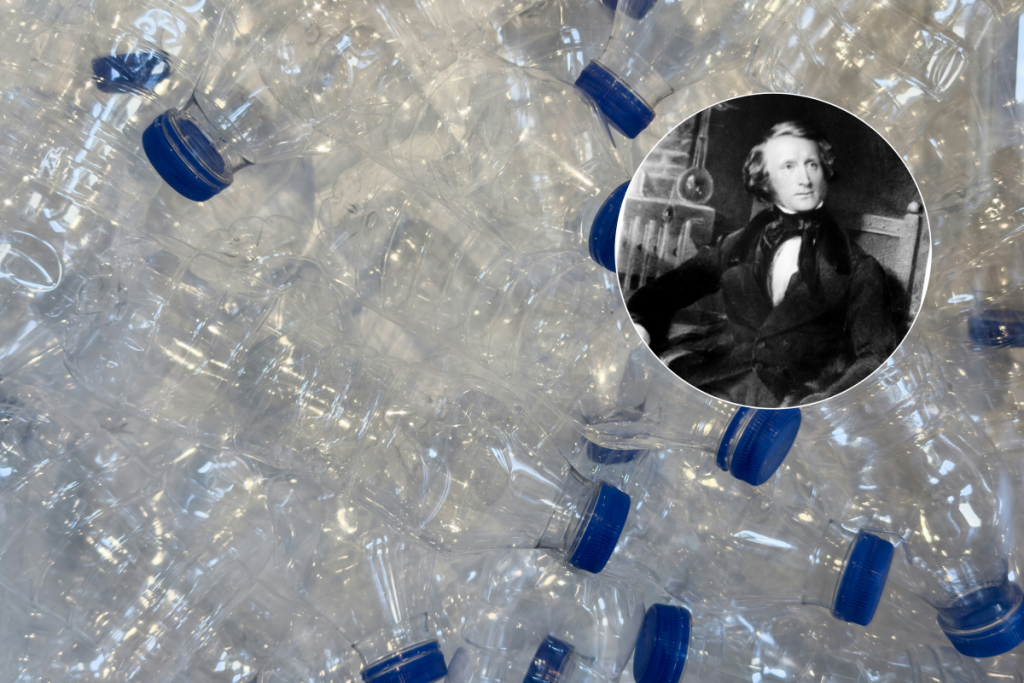

Plastic gets a bad rap these days. A once-miracle material has now infiltrated everywhere from outer space to our very blood, and it’s not even 200 years old yet (that’s less than 0.1% of the lifespan of the human species). We have an unsung Brummie to thank for circuit boards, celluloid film, chewing gum, and so much more.
Alexander Parkes was born on Suffolk Street in Birmingham in 1813. The son of a brass locks manufacturer, he fell into electroplating (which is where you use an electric current to coat a solid object with a thin layer of metal) and revolutionised the industry with his discoveries.
In 1846, he patented the cold cure process for vulcanising rubber, which Thomas Hancock called “one of the most valuable and extraordinary discoveries of the age.” But it was in 1856 that Alexander Parkes truly changed the world. He patented something called Parkesine, aka the world’s first man-made plastic.
Life in plastic, it’s fantastic
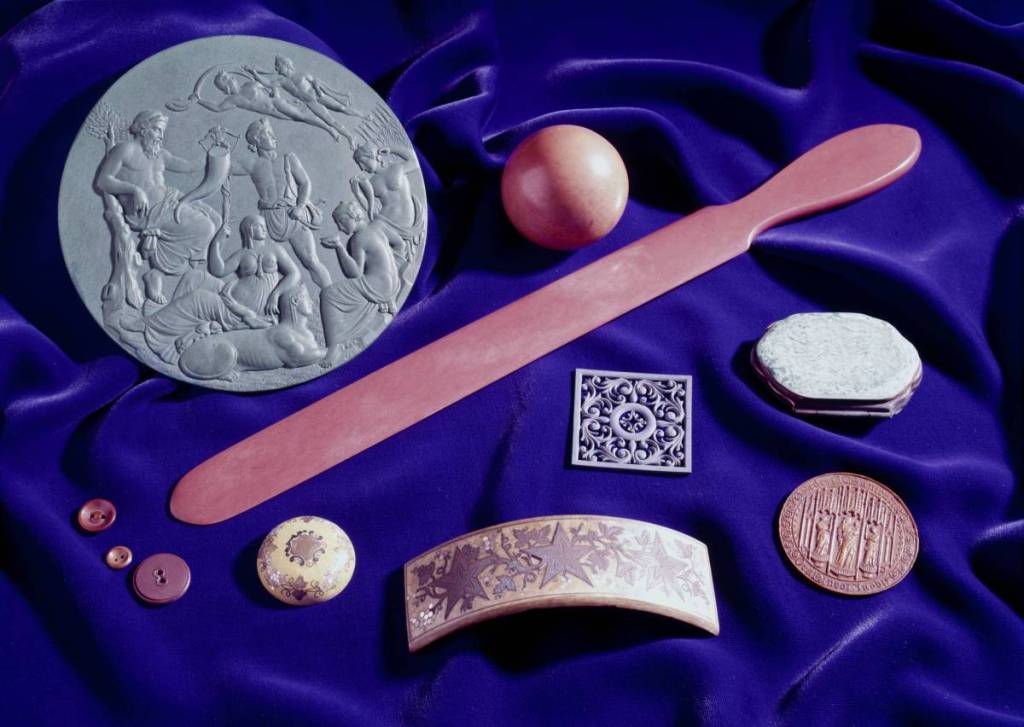
Made from a semi-synthetic thermoplastic material based on cellulose nitrate (aka plant fibres), Parkesine was exhibited at the 1862 Great International Exposition in London, receiving a bronze medal for ‘Excellence of Product’, and the Parkesine Company was set up in 1866 at London’s Hackney Wick—it wasn’t successful.
Parkesine was expensive. It was also brittle. And highly flammable. The company folded just two years later. But Parkes’ ingenuity would lay the groundwork for John Wesley Hyatt’s Celluloid in 1869, before Leo Baekeland created the first fully synthetic plastic in 1907, a new version of plastic, Bakelite.
A blue plaque commemorating Alexander Parkes can be found on the original Elkington Silver Electroplating Works (aka the old Science Museum) on Newhall Street.