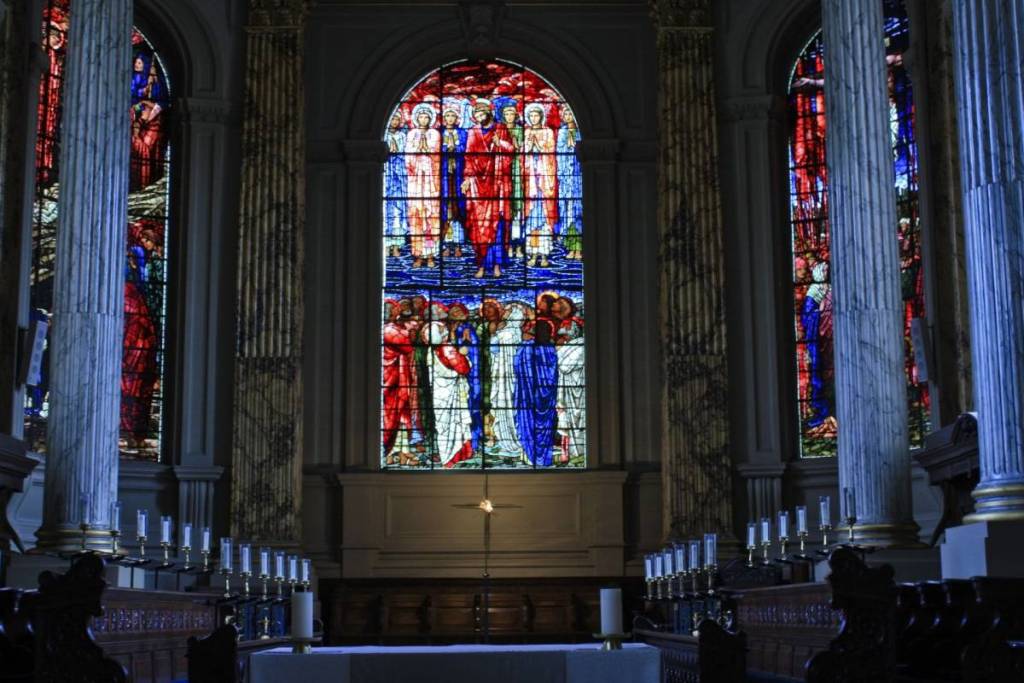

When you’re standing in the shadow of a towering figure like William Morris, it can be hard to find yourself ever in the sunshine. But Edward Burne-Jones—also a member of the Birmingham Set, founder of Morris, Marshall, Faulkner & Co., and an influence on the Arts and Crafts movement—deserves just as much recognition.
Having attended Birmingham’s King Edward’s School and the Birmingham School of Art, Edward later met William at Oxford, where the now-legendary Birmingham Set painted a series of murals in the Union library building. In Burne-Jones’ own words, they intended to “wage Holy warfare against the age”.
Le Morte d’Arthur
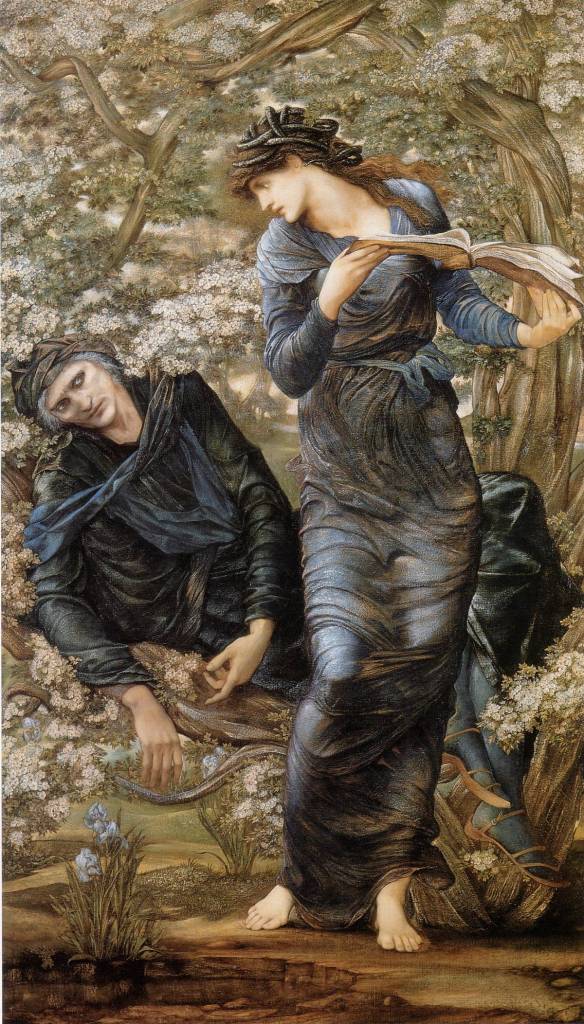
Edward Burne-Jones is now seen as Birmingham’s most famous Pre-Raphaelite painter. His work was often inspired by Thomas Malory’s Le Morte d’Arthur, with one of his most beloved works, The Beguiling of Merlin, establishing him as a star of the new Aesthetic Movement.
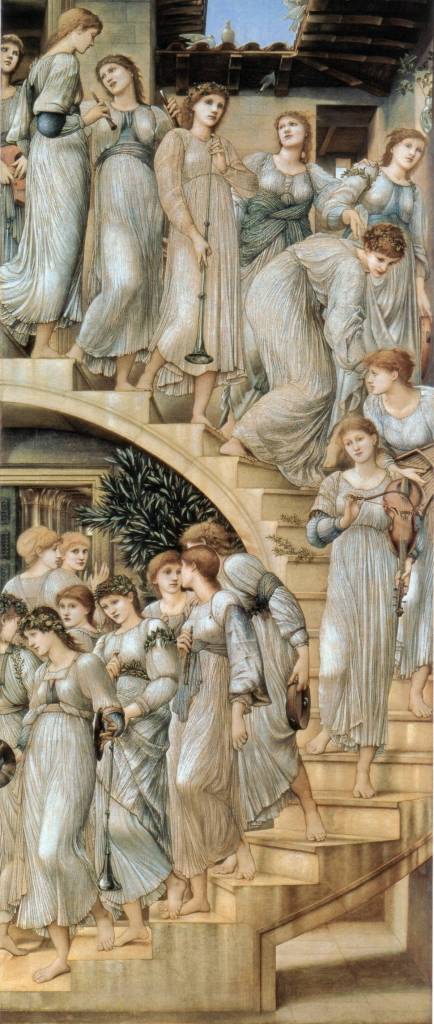
Also among his most famous watercolours are The Golden Stairs, The Star of Bethlehem, The Wheel of Fortune and The Legend of the Briar Rose (which lends its name to the Wetherspoons on Bennetts Hill where Edward grew up). You can find many of his best works at Birmingham Museum & Art Gallery.
But Edward wasn’t just a painter. Working with the decorative arts firm Morris, Marshall, Faulkner & Co., co-founded by members of the Birmingham Set, he set new standards for incredibly beautiful and detailed stained glass—with the ‘most precious stained glass windows in the world’ found at Birmingham Cathedral.
Birmingham Cathedral
Visit Birmingham Cathedral, and you will see what’s often described as Edward Burne-Jones “master works”. Installed between 1885 and 1897, the then parish church’s windows depict recognisable scenes from Jesus’ life: the Ascension, the Nativity, the Crucifixion and the Last Judgment.
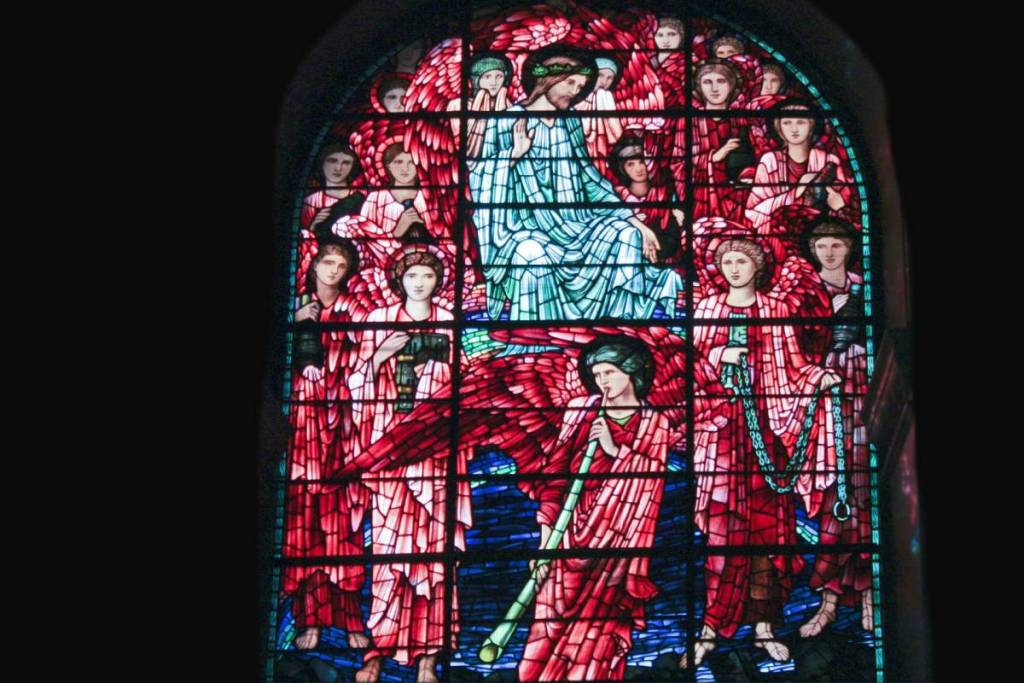
During WWII, in 1939, courtesy of the Birmingham Civic Society, the windows were removed for safekeeping. It took years for the windows to return, and they only recently underwent a restoration to preserve them for future generations. But now Edward Burne-Jones’ masterpieces glitter at Birmingham Cathedral once more.