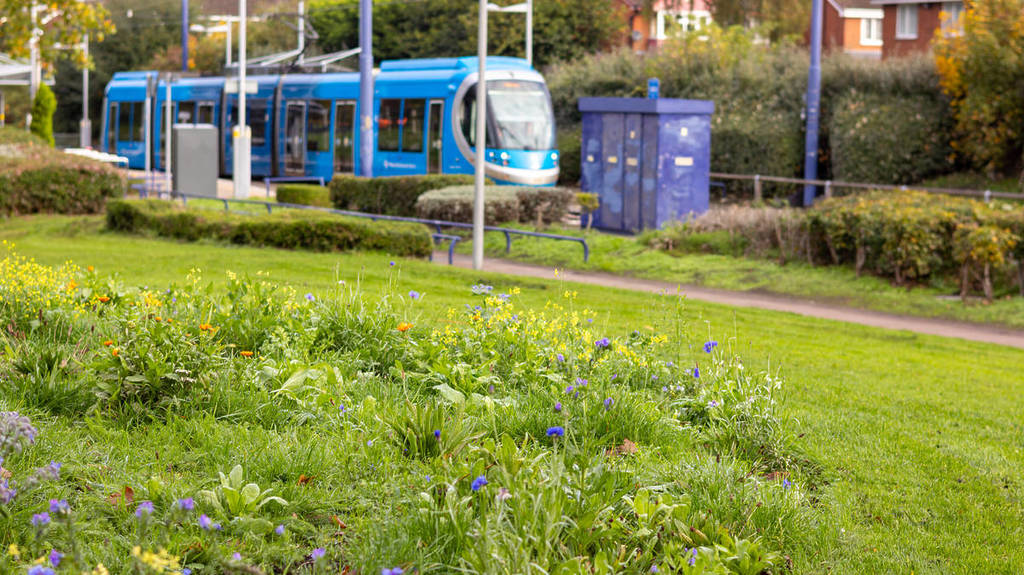

The West Midlands Metro has announced its latest environmental initiative, installing ‘eco-islands’ at stops across the tram network. Designed to support biodiversity, attract pollinators, and create vital habitats for local wildlife, these wildflower zones will also add a dollop of natural beauty to your morning commute.
The first ‘eco-island’ will be installed at the Black Lake tram stop in West Bromwich, where 16 square metres of wildflowers will hope to attract everything from bees and butterflies to hedgehogs and sparrows. Benefits include: stabilising and enriching the soil, improving water drainage and creating wildlife corridors
“These eco-islands are a low-cost way to deliver a significant boost for the local environment, particularly in built-up areas where important native plants and insects would otherwise struggle to survive,” said Sean Walker, Metro Infrastructure Manager.
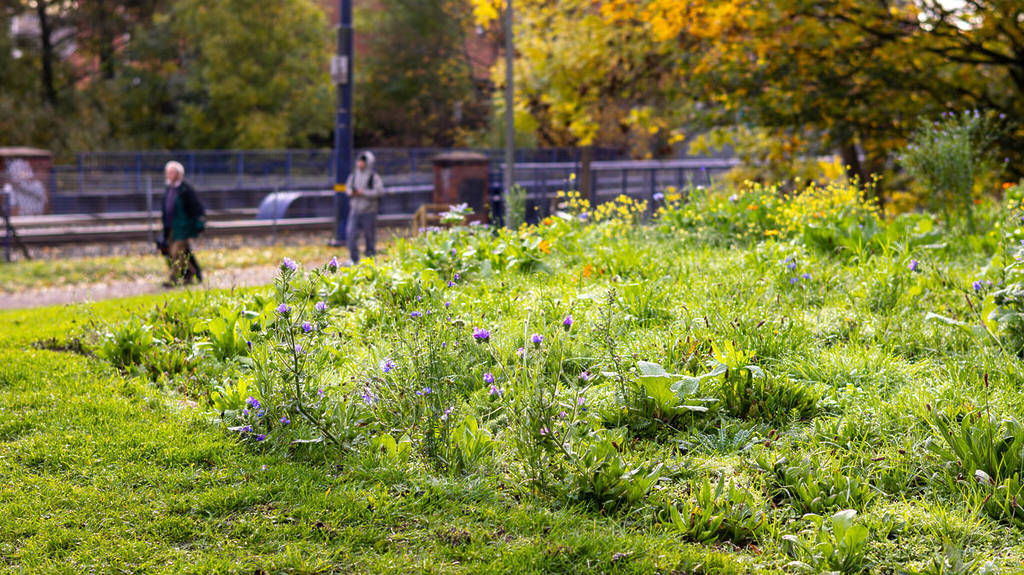
“They also have the added benefit of enhancing the appearance of the tram stops, bringing a splash of colour in the summer months while providing a year-round sanctuary for a variety of rare species.”
Commuters can expect at least six more of these low-maintenance green spaces to be launched at tram stops around the region—including at Loxdale, The Crescent, West Bromwich Central, Handsworth Booth Street, Soho Benson Road and Priestfield. Work is estimated to be complete within the next 12 months.
Sean added, “This really is an exciting project that brings a wealth of benefits for the environment and our customers, who can enjoy the sight of beautiful wildflowers on their daily commute. In fact, anyone waiting for a tram at one of the stops will be able to spend a few minutes appreciating the natural beauty to be found in some of the most built-up areas of the region.”