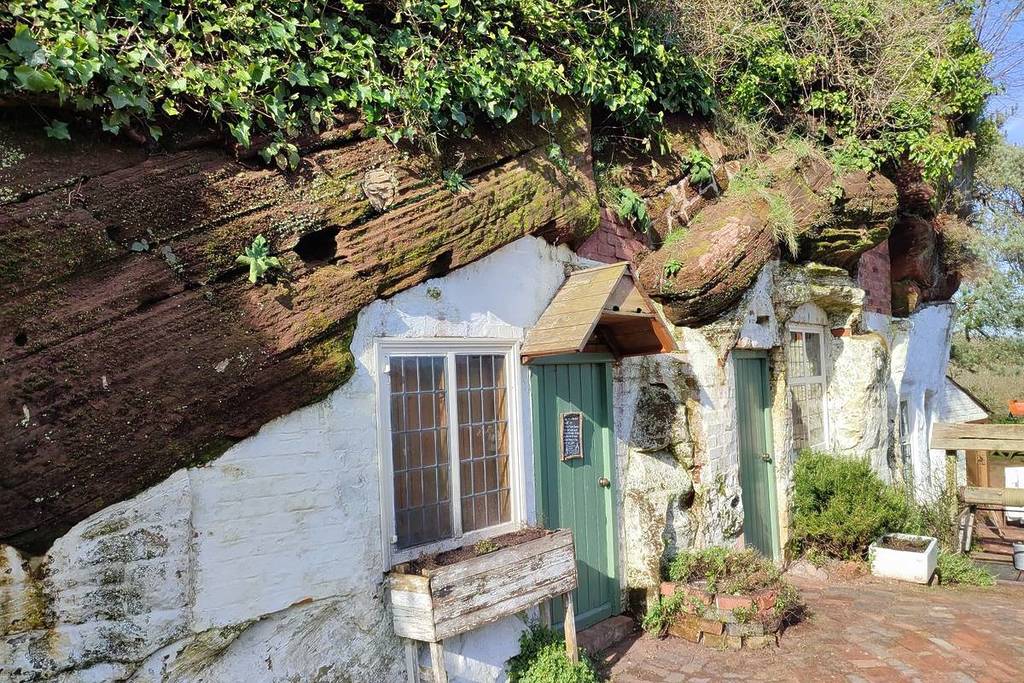

If you thought humans stopped living in caves millennia ago, think again. Just under an hour from Birmingham is the West Midlands’ very own Hobbiton, aka Kinver Edge. A large, red sandstone cliff with a series of rock houses that had people living in them as recently as the 1950s. Today, they serve as a unique tourist attraction.
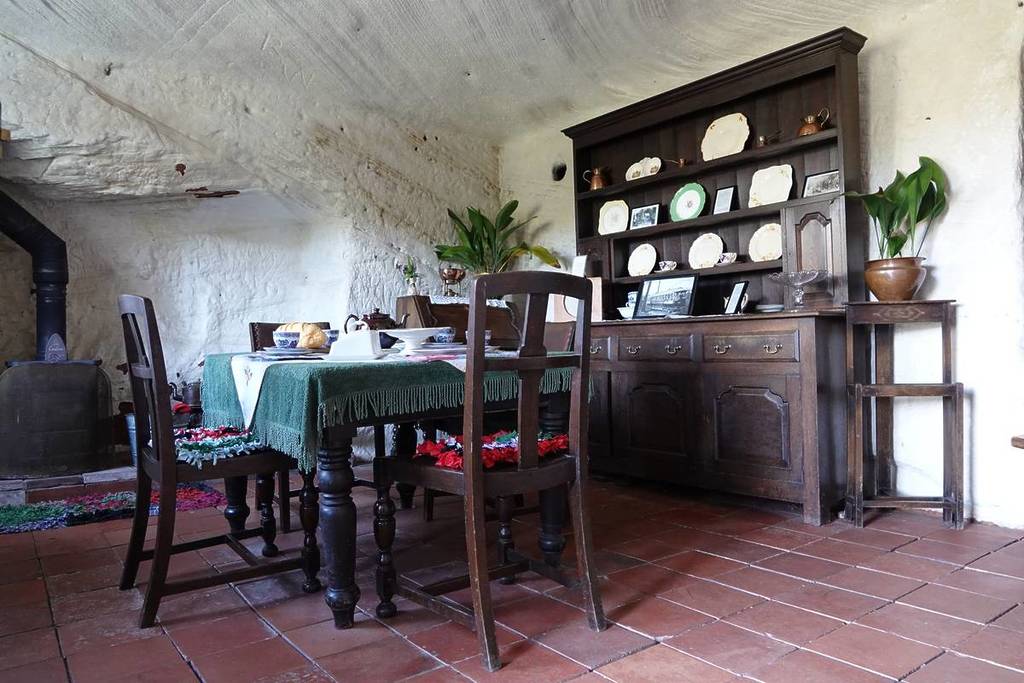
Among the three separate rocks is Holy Austin Rock. Here you’ll find the houses restored to Victorian-style cottages (based on a painting of former occupants Mr and Mrs Fletcher) and a cafe open to visitors. Inside, discover stoves, a fireplace, furniture, and life as close to it as it was when people lived here.
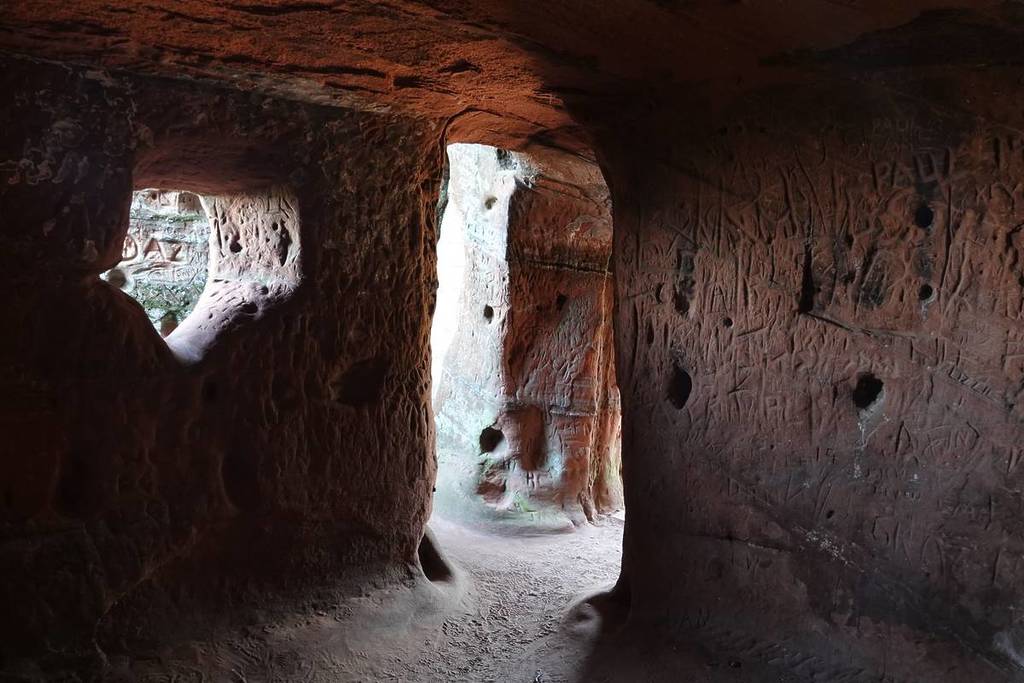
The houses at Vale’s Rock aren’t restored but can be seen from afar, while you can climb into the houses at Nanny’s Rock and wander around the empty rooms (look out for ‘devil’s chimney’ which leads up through the rock). There’s also an Iron Age hillfort in the area, which you will find if you follow the Rock House walking trail.
After your (gentle) hike, tuck into everything from sandwiches to soup, cakes to coffee, in the unique stone-cut café. As much fruit and vegetables from the Rock House allotments are used too, so the menu changes with the seasons, while The Book Nook must be the only cave-dwelling, secondhand bookshop in the world!
How did people come to live in the rock houses?
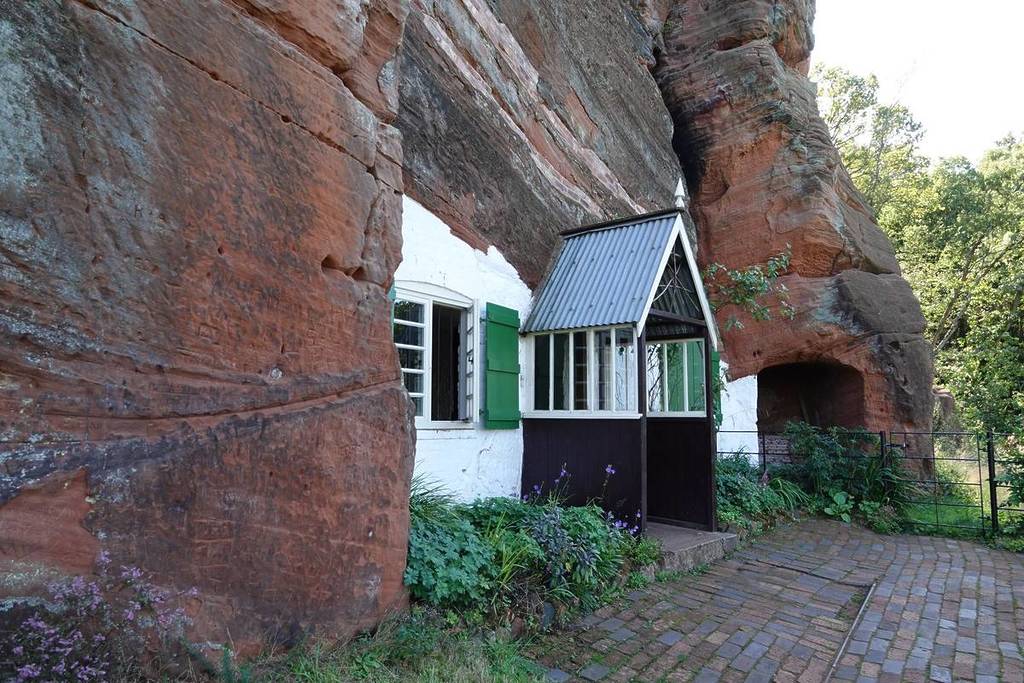
Kinver Edge’s first residents are said to have turned up in the early 1600s, likely looking for shelter. The earliest record of the rock houses comes from Joseph Heely in 1777. During a storm, he was given shelter by a ‘clean and decent family’ and described the rock houses as ‘warm in winter, cool in summer’. The 1861 census lists 44 people living in 11 homes at Holy Austin.
Sandstone is relatively easy to carve into, and rooms could be added quickly. Providing fresh air and more space than living options in nearby towns, especially during the Industrial Revolution, they had a certain appeal in their day. You could get water from the well, and later gas (never electricity), with working opportunities in nearby farms, or local industry in the Black Country or Kidderminster.
In the 20th century, the fame of Kinver Edge made it a major tourist attraction. Many families opened their homes and served tea and sandwiches to visitors. The last residents moved out in the 1950s, however, and a cafe continued to operate until 1967. The area remained largely overgrown and in ruin until the Holy Austin rock houses were restored and reopened in 1997.
How do I get there from Birmingham?
If you’re driving, follow the A456 all the way to Hagley, turning off on Stakenbridge Lane. Take Rocky Lane and Beech Tree Lane to the A449 in Cookley. Turn right, follow to Windsor Holloway and drive to Compton Road, taking about 45 minutes.
By public transport, take a train from Birmingham Snow Hill to Stourbridge Junction, changing to Stourbridge Town, and catching the 242 bus to Meddins Lane (for around 1 and a half hours).