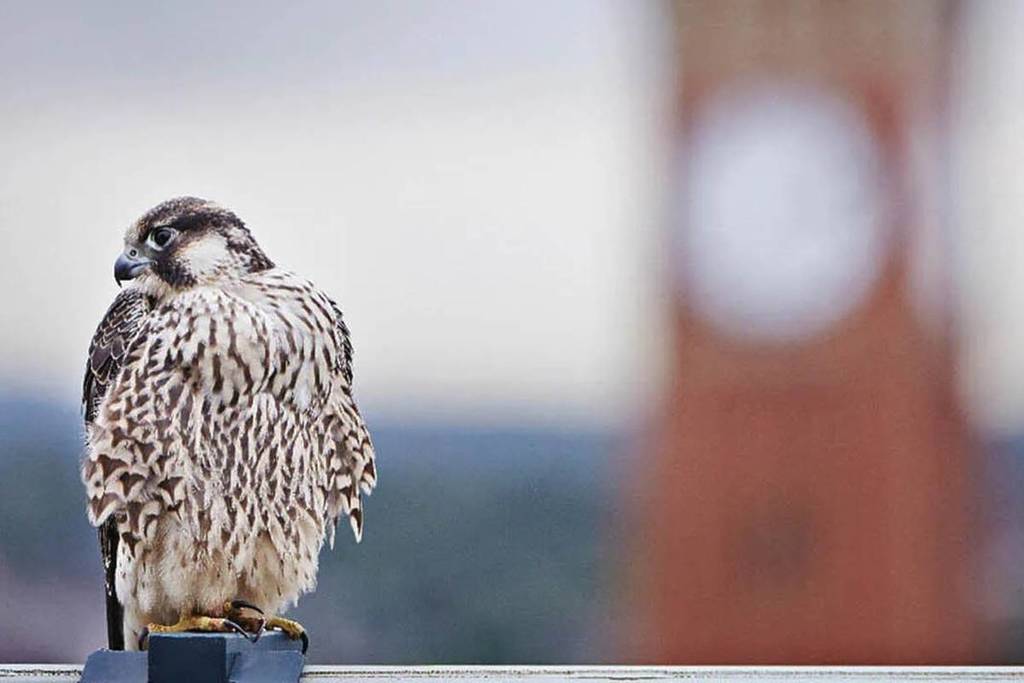

When diving in on a hunt, the peregrine falcon can reach speeds of over 240mph—making it the fastest animal on the planet—but this nesting pair at the top of the University of Birmingham’s Joseph Chamberlin Memorial Clock Tower aren’t going anywhere fast.
The university has set up a new livestream inside Old Joe, where everyone can get a close-up view of the nesting box, which currently contains four eggs. You can now watch peregrine falcon behaviour 24/7 on YouTube, from hunting and eating, to incubating eggs, and hopefully soon, catch a sight of the hatchlings.
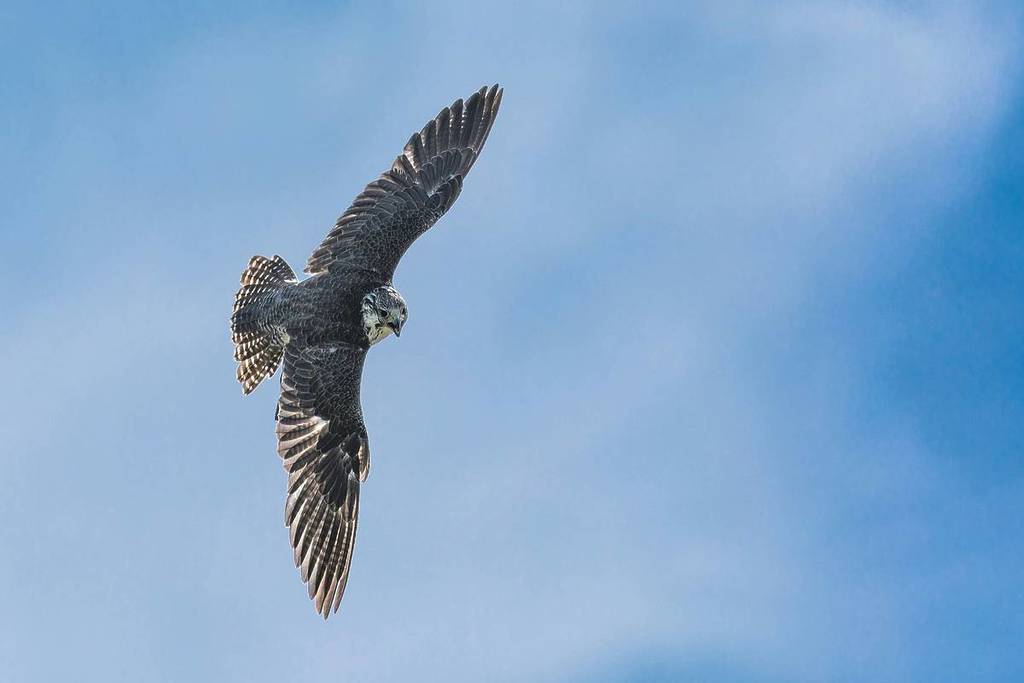
“We are thrilled that the peregrines have returned to campus to nest and hopefully raise several chicks,” said Steve Jordan, Director of Estates at the University of Birmingham. “The University of Birmingham has worked hard over the years to make Old Joe a safe and welcoming place for the birds, so it is heartening to see this work result in four eggs this year.
There are only 1,800 pairs of peregrine falcons in the UK today. The University of Birmingham has been home to nesting peregrine falcons since 2013, but it’s believed that falcons have been on campus since the early 90s—having been protected animals under law since 1981.
Peregrines don’t build their own nests, preferring high places like cliffs, which is why the University installed a heavy-duty nest box in Old Joe. Usually, UK peregrines lay three to four eggs a year, between late March and late April, with both parents sharing the job of incubation.
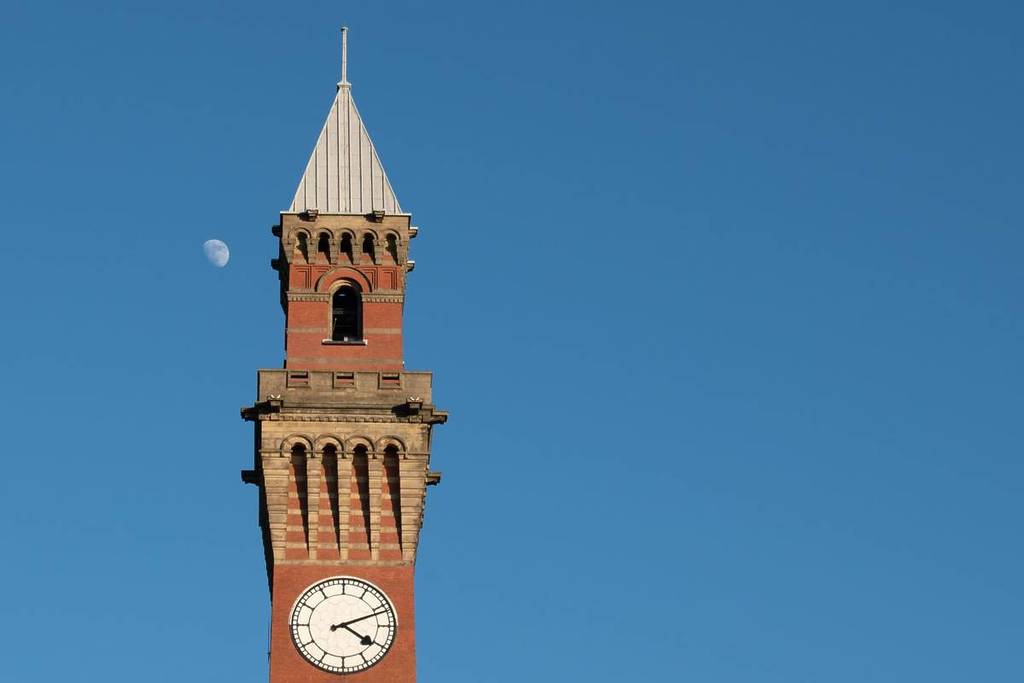
It will likely take between 29 and 32 days for the eggs to hatch, while the chicks fledge between 35 and 40 days. The fledglings are then reliant on the adult falcons for the next two months until they are strong enough to become independent. While this happens, all major activity at Old Joe is on pause, including balcony and belfry access.