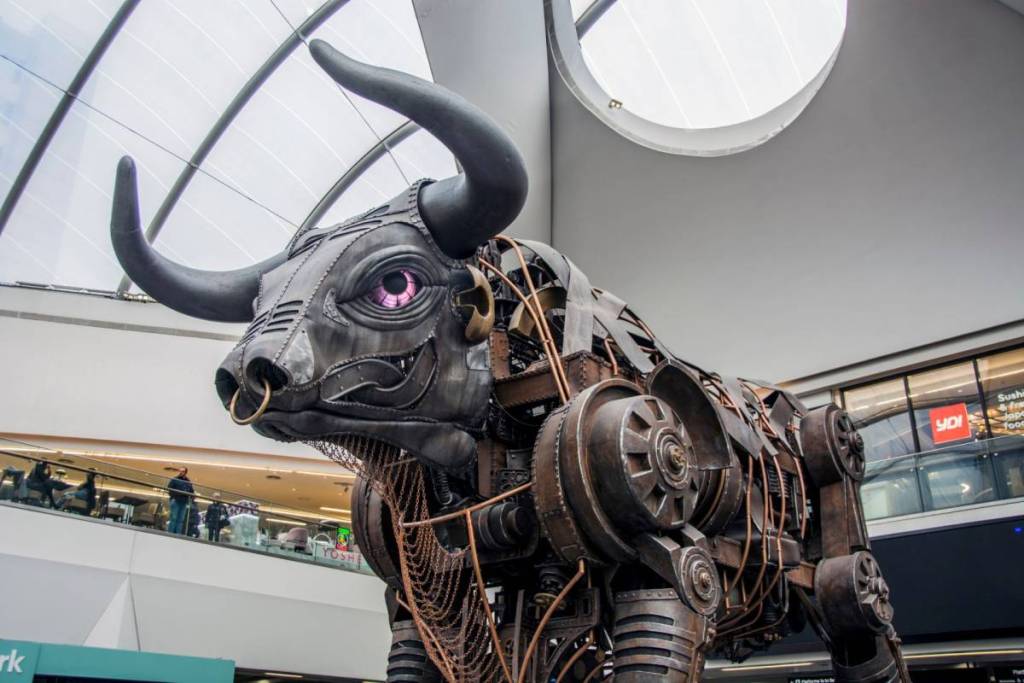

The surreal sight of a 10-metre-tall mechanical bull greets anyone arriving in Birmingham via New Street. Ozzy The Bull became an instant Brummie icon when he arrived at the Opening Ceremony of the Commonwealth Games 2022, before finding his permanent home at the busiest station in the UK outside of London.
While Ozzy has captured the hearts of locals (#SaveTheBull trended on social media when we thought he’d be destroyed following the games), he’s not the beginning of Birmingham’s love affair with bulls—which can also be found on our city flag, in art trails, as sporting mascots, outside our iconic shopping centre, and giving a name to CAMRA’s ‘Pub of the Year’ 2022.
What are the links between Birmingham and bulls?
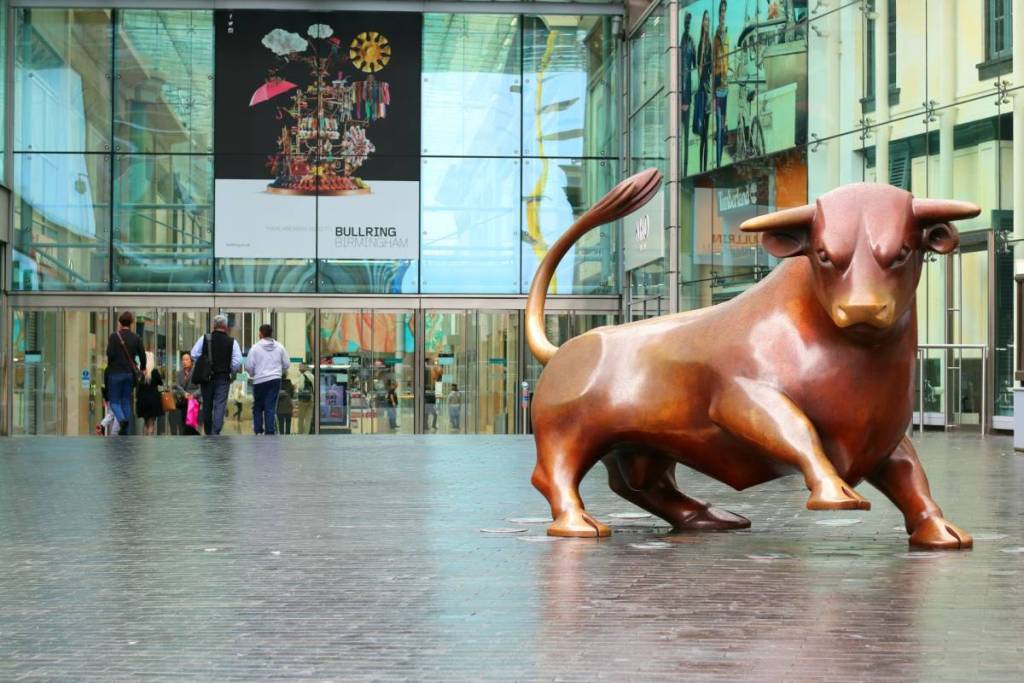
The biggest connection can be linked to the Bullring shopping centre. Well, actually, two shopping centres. First, there was The Bull Ring, which sat in the same location during the 1960s, before being demolished and rebuilt as the Bullring in 2003. Since then, a 7 ft bronze statue of a running bull has sat outside its entrance.
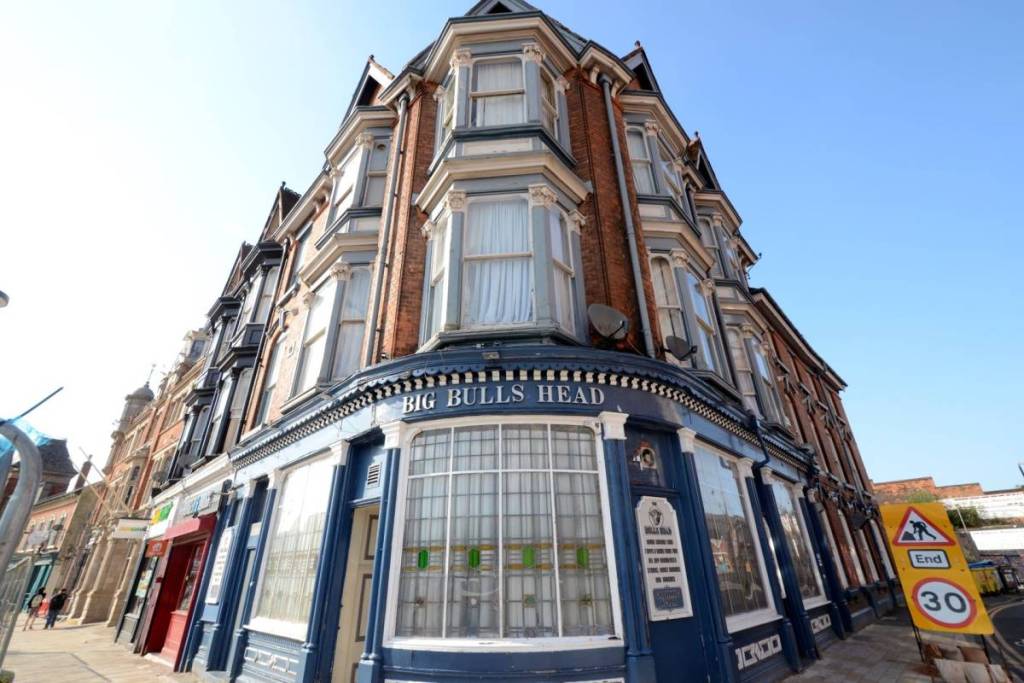
Created by Laurence Broderick, the Birmingham Bull has become a popular tourist destination and a de facto city mascot. You will also find a golden bull’s head on the official flag of Birmingham (adopted in 2015). Plus, The Bull in the Gunsmith Quarter is a historic boozer that’s stood since the early 19th-century, while you will also find the Victorian-era Big Bulls Head in Birmingham’s Irish Quarter.
But Birmingham’s history with the bull runs much darker than these surface-level connections. The location of Birmingham’s shopping centre has a long, storied past of bull-baiting and slaughter—in the 16th century, John Cooper was given the right to bait the bulls there.
A patch of green by St Martin’s Church was used for the blood sport that pitted bulls and dogs against one another. This is what was first called The Bull Ring, and the name specifically refers to a hoop that the bulls were tied to. Bull-baiting stopped at the Bull Ring in 1798 when it moved to Handsworth.
What about now?
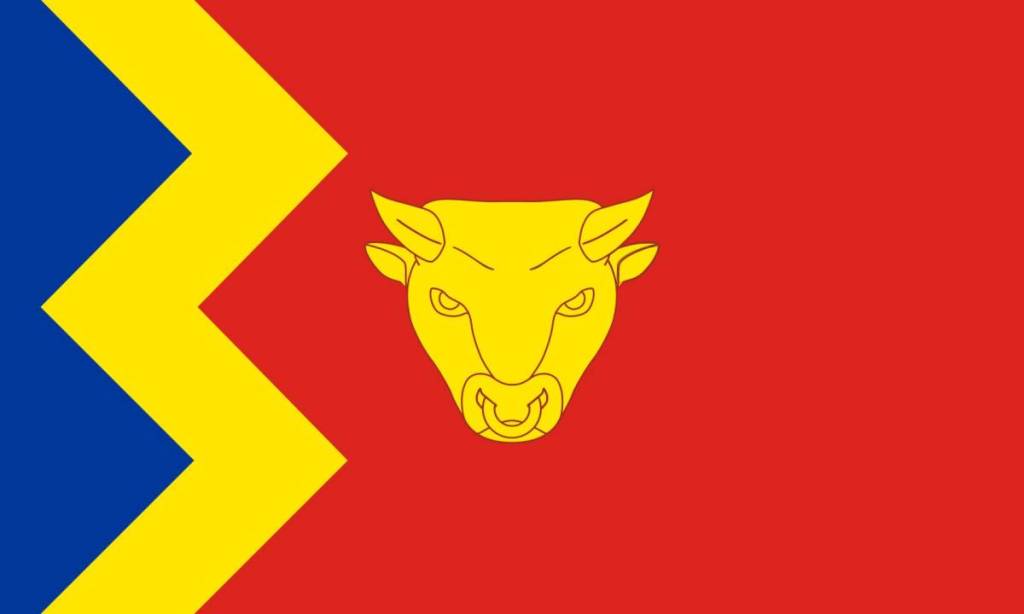
The sport was finally outlawed in 1835, and the city’s ties with the horrific sport have long been dissociated. To some, it is still a controversial image, but to many, the Birmingham bull has come to symbolise the spirit of the city and its people: Determination, persistence, and strength.