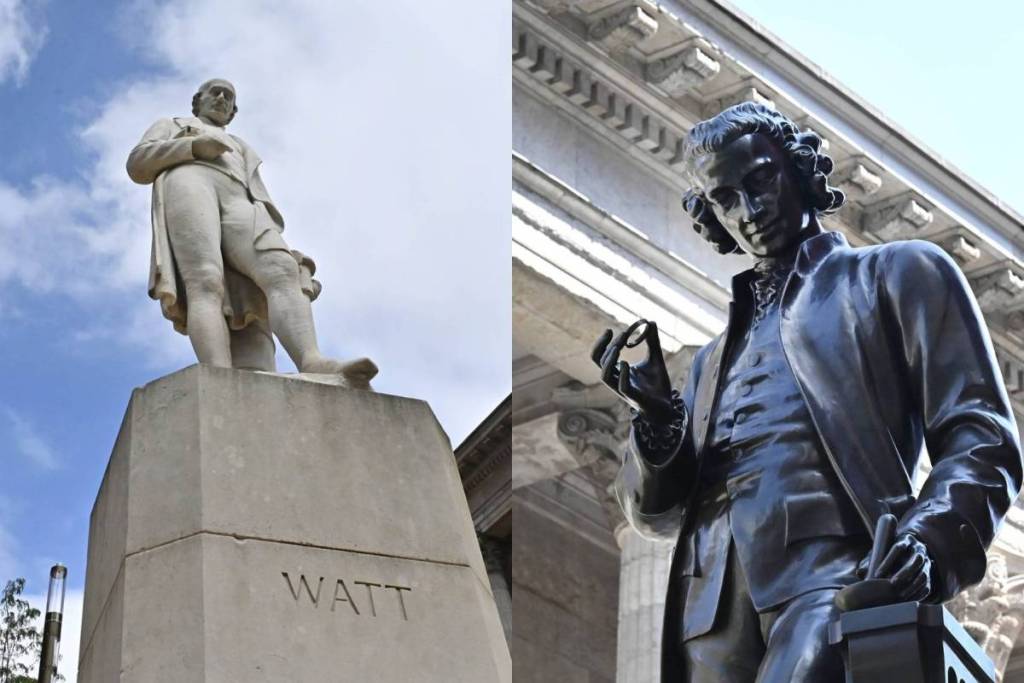

Two Birmingham legends have returned to the city centre after 10 years. Known for their huge impact on the Industrial Revolution and the English Enlightenment, respectively, James Watt and Joseph Priestley’s statues can now be found at opposite ends of Ratcliff Passage at the new Paradise development.
Having once sat alongside the original Victorian-era Central Library, where Three Chamberlain Square is found today, the statues were later moved to the western part of Chamberlain Square where they stood for a further 46 years before being put into safe storage when the redevelopment of Paradise began.
Poised on their three-metre-high plinths, the statues themselves stand 2.5 metres tall, giving them each a combined height of 5.5 metres. Watt’s statue was cast in Portland stone in 1868, while Priestley’s original marble statue dates from 1874, but had deteriorated so much by 1951 he had to be recast in more durable bronze.

The imposing pair have undergone a lot of work over the past year to prepare for their return. They were brought back to life by Market Drayton-based Midland Masonry, specialists in stonework conservation and restoration, as well as Ian Clark Restoration, providing specialist metalwork conservation.
Jane Thompson Webb, Conservation Manager at Birmingham Museums Trust, said: “The return of these vital figures to an accessible location in the very heart of the city will allow everyone to be able to enjoy them and underlines our pride in both Watt and Priestley’s achievements, which influenced the world around us today.
“So many of the advantages society now enjoys are due in part to the vital role of engineering solutions and the brilliance and foresight of people like Priestley and Watt whose advances in science and industry gave an incredible boost to the world economy at a key moment in history.”
Who are these important Birmingham figures?
James Watt
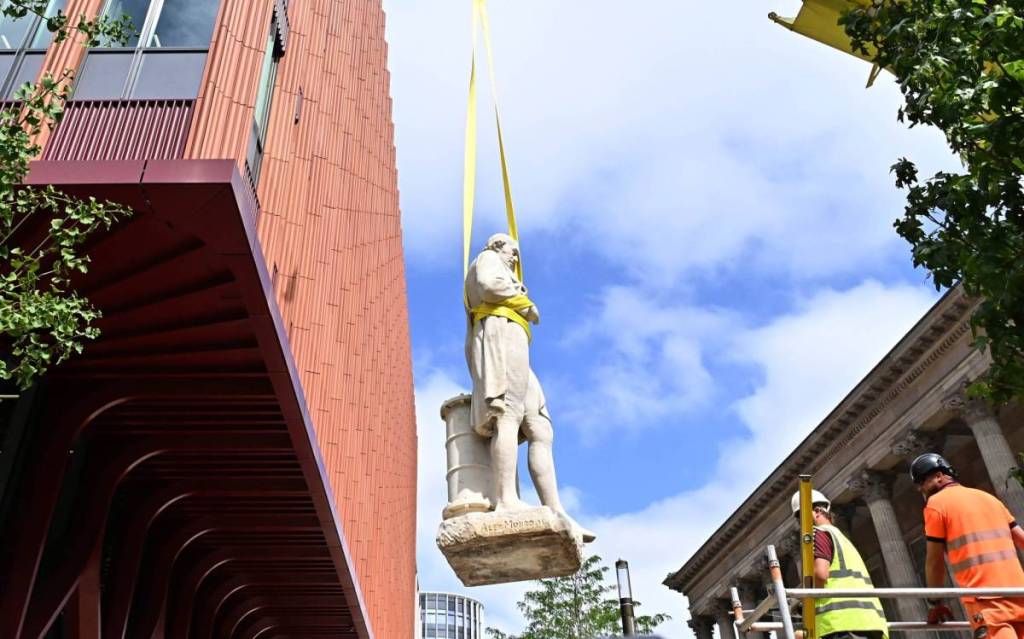
The Scottish inventor James Watt made Birmingham his home as he invented the Watt steam engine and brought about huge changes to the Industrial Revolution. He also developed the concept of horsepower—the unit of power, the watt, was named after him—and was an influential member of Birmingham’s Lunar Society.
Joseph Priestley
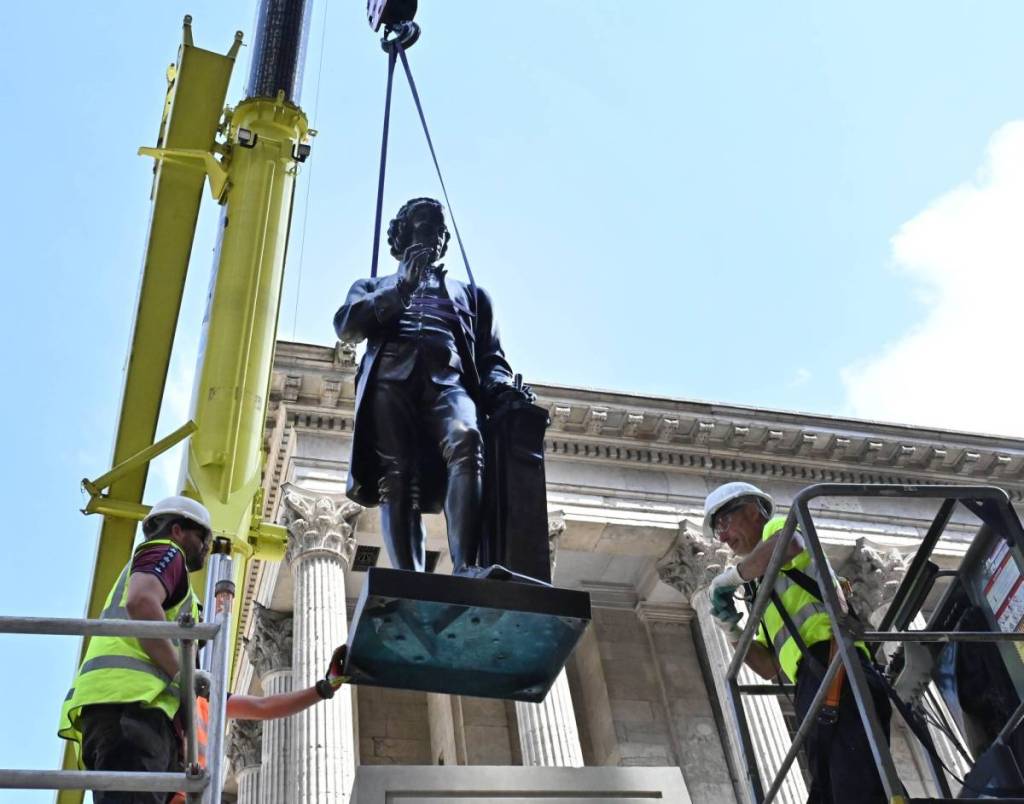
You have Joseph Priestley to thank for carbonated water (without him, we wouldn’t have San Pellegrino, Perrier, or even Coca-Cola), but the pioneering chemist, philosopher, and theologian is best known for discovering oxygen and making major advances in chemistry and electricity. He was also active in the Lunar Society.