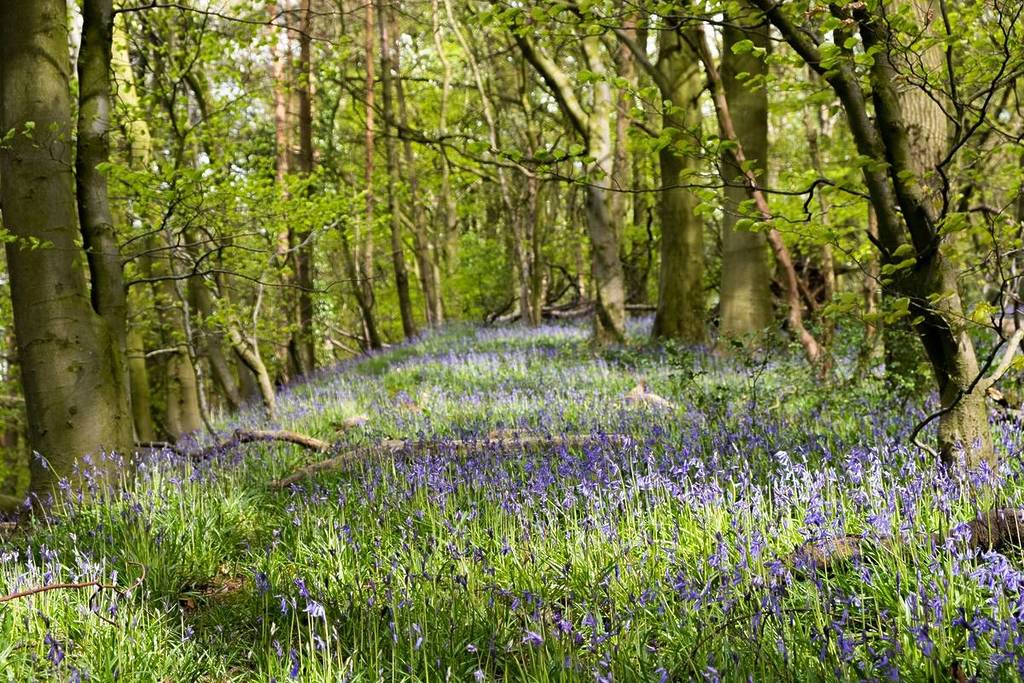

Known for blooming from mid-April to early May, no other flower captures the English imagination quite like bluebells—inspiring everyone from Emily Brontë to Liz Berry, Oscar Wilde to George Orwell. With almost half the world’s bluebells found in the UK, there’s no better time for hunting down these vibrant-blue flowers than right now.
You shouldn’t have to try very hard to find them. I’m looking at some in my garden right now. You’ll find plenty of beautiful bluebell fields in and around Birmingham, exactly where you might think—Lickey Hills, Moseley Bog, etc. But an underrated location with an abundance of bluebells is Beaconwood and the Winsel.
Why visit Beaconwood and the Winsel?
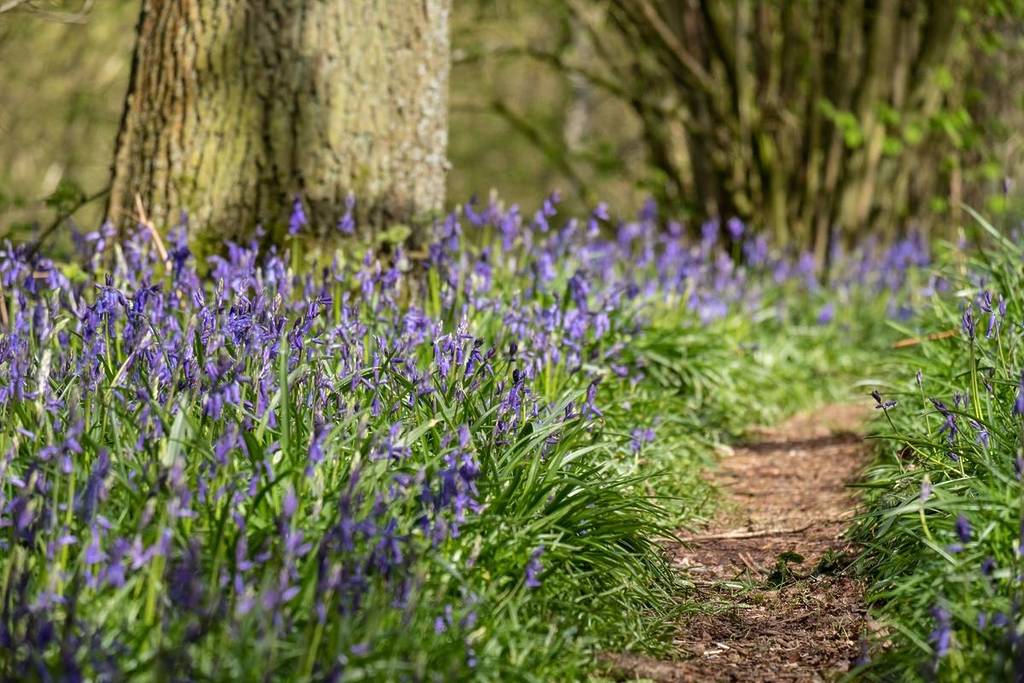
Part of the National Trust’s Chadwich Estate, these beautiful woods on the edge of Birmingham boast 11 hectares of ancient trees to explore. Beaconwood was cleared and replanted with oaks about 120 years ago, while the tree plantations on the Winsel date from around 1930—the Great Oak at the heart is around 250 years old.
In spring, the quiet woods’ floor transforms into a colourful carpet of bluebells, while the leafy canopy overhead and densely packed bracken and bramble, encourage all sorts of wildlife. Birdwatchers, particularly, should be delighted by the potential sights of sparrow hawks, tawny owls, great spotted woodpeckers, and many more woodland birds.
What else do I need to know about bluebells?
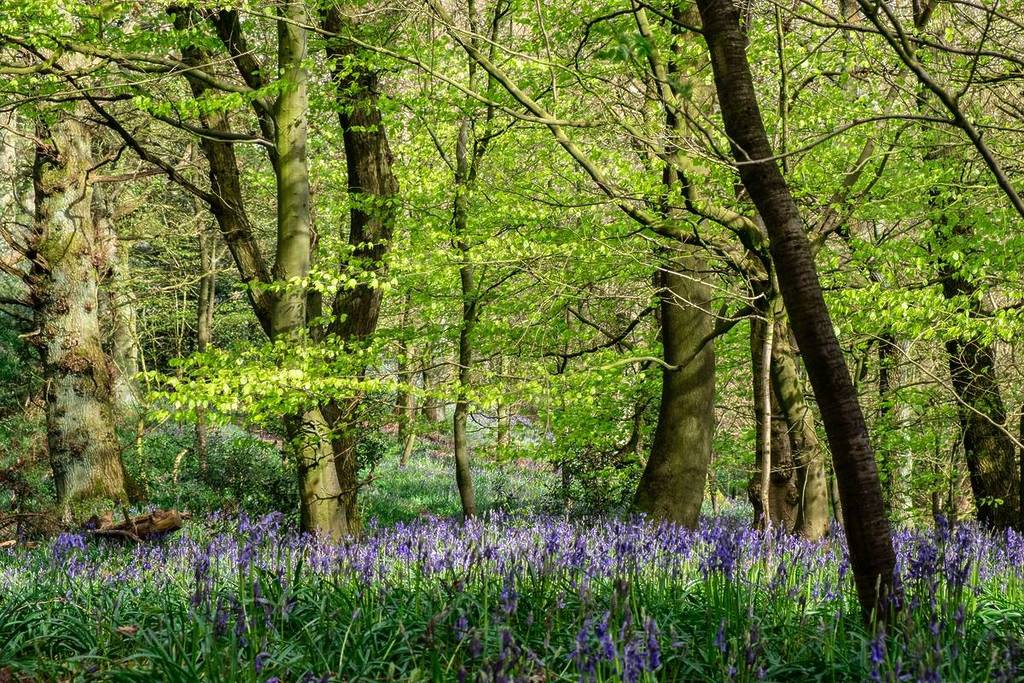
Be mindful of where you step in Beaconwood and the Winsel; bluebells can take years to recover after damage. In fact, it’s actually against the law to intentionally pick, uproot or destroy bluebells; while wandering into the middle of a ring of bluebells means you may fall under a fairy’s spell.
How do I get there?
Located northwest of Lickey Hills, Beaconwood and the Winsel are a 30-minute drive from Birmingham city centre. Follow the M5 to Halesowen Road (A38) in Worcestershire and take the 4th exit. Alternatively, take the X20 from the University Station to Spring Pools near the Beaconwood and the Winsel Nature Reserve.