
Ozzy Osbourne: Working Class Hero might’ve been among the most popular exhibitions Birmingham Museum and Art Gallery has ever seen. Welcoming almost 800,000 fans in 15+ months. But it’s now been replaced by a new exhibition, illuminating two more local Birmingham legends.
Illustrating Birmingham: 100 years through the eyes of the Lockwoods opened in the Bridge Gallery today (Tuesday, November 3, 2026). The new exhibition looks at the work of a father and son artists whose paintings and drawings document Birmingham and its people across nearly a century of change.
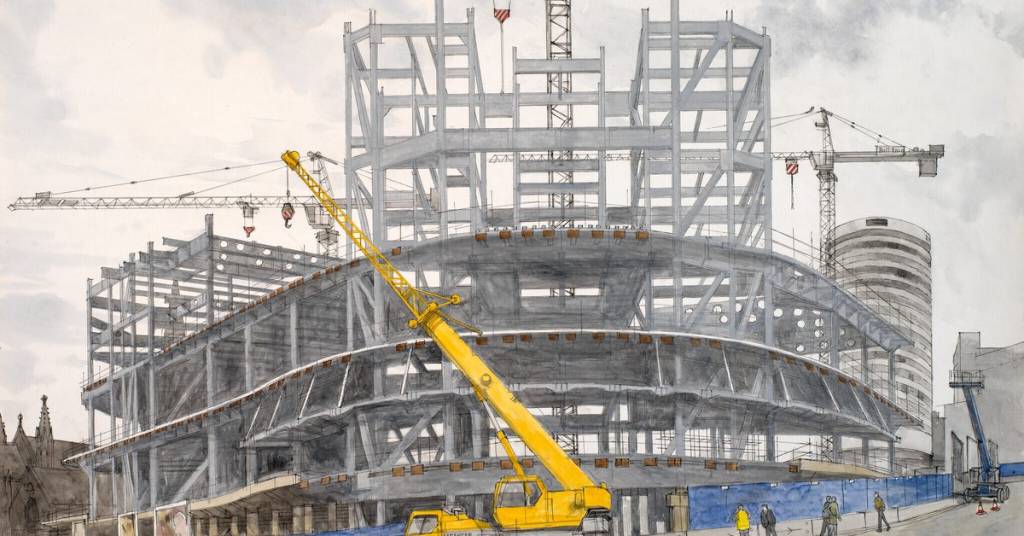
Frank and Arthur Lockwood painted Birmingham over a period of almost 100 years, from the 1920s through to the 2010s, recording its streets, buildings, and the people who lived and worked there. Their work is a record of a city in constant change, from demolition and redevelopment to new buildings, factories and shopping centres.
“The work of Frank and Arthur Lockwood offers a fascinating window onto Birmingham across almost a century. Their paintings capture not only how the city’s streets and buildings have changed, but the people who have made Birmingham what it is today,” said Zak Mensah and Sara Wajid, co-chief executives of Birmingham Museums Trust:
“This exhibition reflects Birmingham as somewhere that is always changing and has never stood still. The city we see today won’t be the same in 50 years’ time. It also reminds us that everyone’s experience of a place is different. We all have our own memories and perceptions that make the city our own.”
Frank and Arthur Lockwood
Frank Taylor Lockwood was born in Yorkshire in 1895 and trained as a technical artist. After serving in the First World War, he worked in Birmingham, including leading the design studio at Cadbury’s. He became an important figure in Birmingham’s art scene as an associate of the Royal Birmingham Society of Artists (RBSA).
His son, Arthur Lockwood, was born in Birmingham in 1934 and began painting with his father at an early age. He later trained in graphic design and worked for Penguin Books, while continuing to draw and paint throughout his life. Together, their paintings, sketchbooks, designs, advertising material and other work form a unique record of Birmingham.
From fields and farms to factories and shopping centres, many of the pieces depict places that have disappeared, while others show the city being built and rebuilt. In this way, the exhibition invites you to think about how Birmingham has changed, and continues to change, and how different people experience the city.