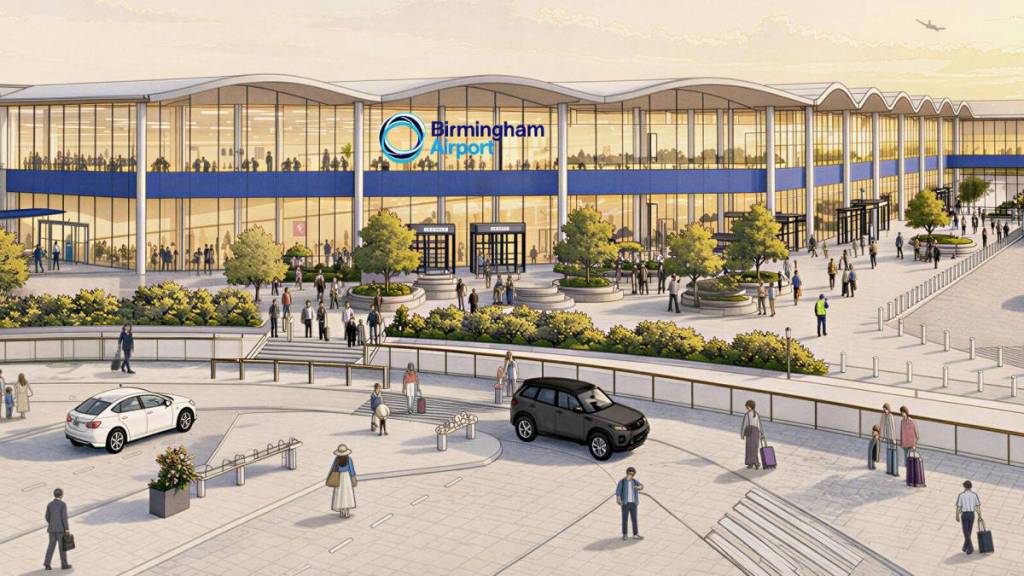

You should expect to see a huge change at Birmingham Airport over the next 15 years. An ambitious draft Master Plan sets out a long-term vision for the Midlands’ largest airport—from how to make better use of its existing runway capacity to significantly enhanced passenger facilities and improved surface access.
As part of the plan, Birmingham Airport has announced a £2bn investment that could not only take the airport to 30m passengers annually, but hopefully generate an extra £3.6 billion for the West Midlands region and create over 50,000 new jobs—with 3,800 on site at the airport.
The first phase of development could start next year, with significant investments made in areas including baggage facilities, reconfiguration and additional aircraft stands, improvements to surface access and terminal facilities. An eight-week public consultation will start on Friday, October 16.
“The £2bn proposed investment is unprecedented at Birmingham Airport and will take our airport close to 30m passengers,” said Nick Barton, Chief Executive Officer at Birmingham Airport Limited. “This level of ambition sends a strong signal of support and confidence in our airport and wider region.
“We have a laser light focus on delivering sustainable growth that supports regional prosperity, while responding responsibly to the environmental challenges. This Master Plan will enable us to deliver on that ambition and ensure we are ready for the future.”
Birmingham Airport has, however, said that “the delivery of this plan is reliant on a fair and stable taxation environment”, claiming that English airports are facing uncertainty amid increased running costs from employment, energy and taxes, and citing the doubling of its business rates bill at Birmingham Airport.
The first public consultation event on October 16 is in Hampton in Arden. A final report will be published in 2027 summarising all feedback received, looking to identify key themes, issues and suggestions raised, and how feedback was considered, and how it has influenced the final Master Plan.